At the current rate, only 12% of the world’s sustainable development goals will be met by 2030, signaling that a fundamental shift in collaborative action and investment is needed to get on track! By working together across borders and sectors, we can achieve sustainability and lead the way in the North American Great Lakes region.
At the heart of the CGLR’s work is a strategic framework designed to unify economic growth, environmental stewardship, and social equity. Anchored in an approach that prioritizes measurable sustainability outcomes, this framework connects stakeholders across borders and sectors in tackling shared challenges.
By aligning collaborative actions with long-term sustainability goals, we are ensuring actions are data-informed and built for collective impact.
Achieving sustainability where it matters most, in regions like the Great Lakes, in our cities, and in our homes and workplaces, where the economy and society operate and where nature provides, has never been more pressing, or promising.
CGLR, instead of pitting one interest against another, provides a forum for motivating government, business, NGO, and civil society stakeholders to learn about economic and sustainability challenges, discover common ground, and develop pathways and solutions to a sustainable future in the Great Lakes region.
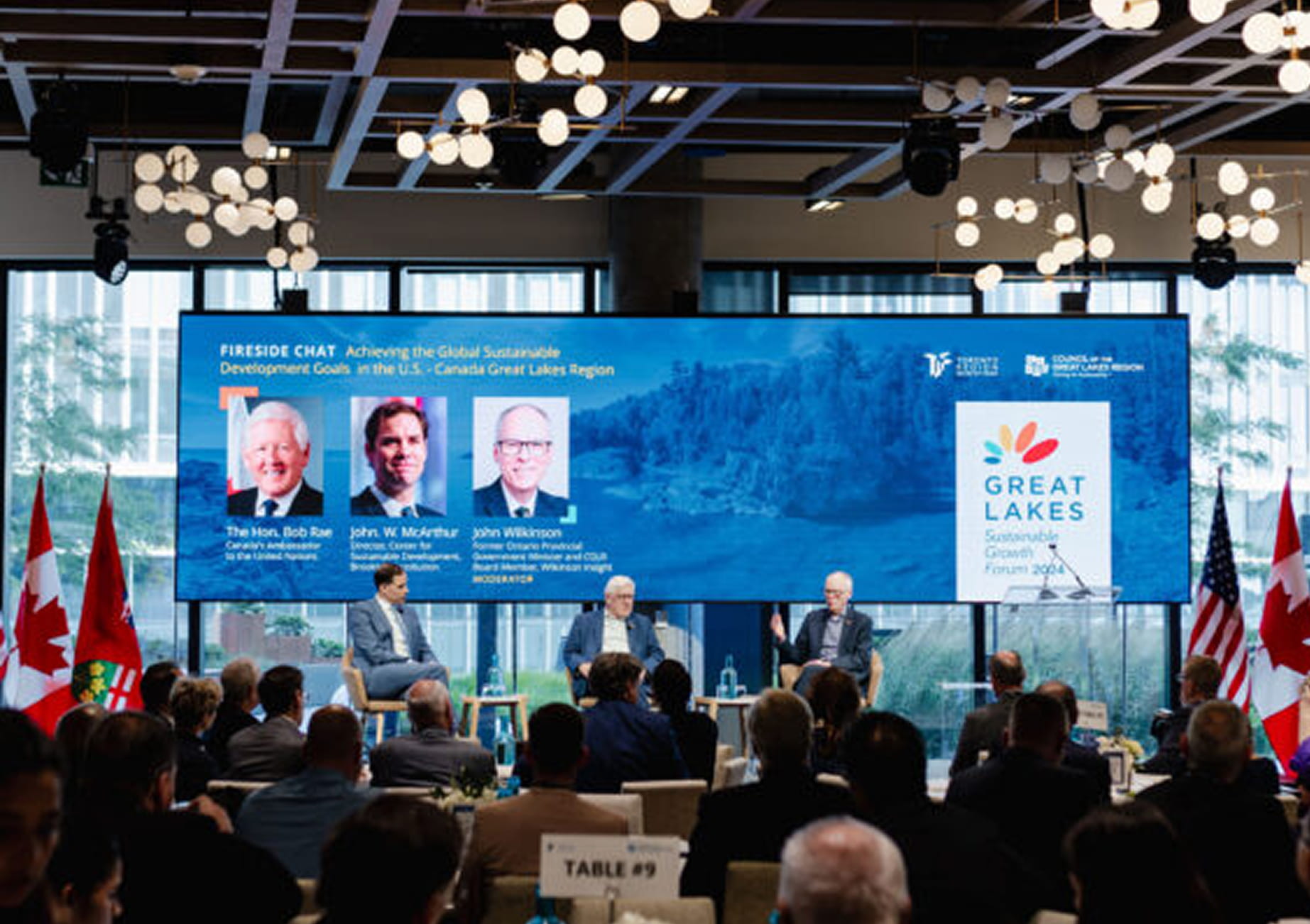
The Council champions systems change by convening government, business, academic, nonprofit, and community leaders in high-level dialogues and initiatives. Rather than addressing issues in silos, our work fosters integrated solutions that influence public policy, corporate strategy, infrastructure planning, and regional investment, ultimately benefiting people, the economy, and the environment in a lasting manner.

The economy of the Great Lakes region rivals the largest industrialized nations in the world. Establishing sustainable consumption and production patterns across the region is vital for our environment, our future, and our competitiveness.
Not everyone living in the Great Lakes region has benefited from tits economy or its clean environment. That’s why we strive to do better, from providing decent work opportunities for all to addressing clean water education, and food systems.
Our air, water, and lands across the region have been negatively impacted by human activity. Climate change is creating even bigger challenges. Protecting the environment is, therefore, crucial for preserving nature and ensuring the wellbeing of future generations.
Without consistent sustainability metrics to guide decision-making and investment, it’s difficult to answer fundamental questions like
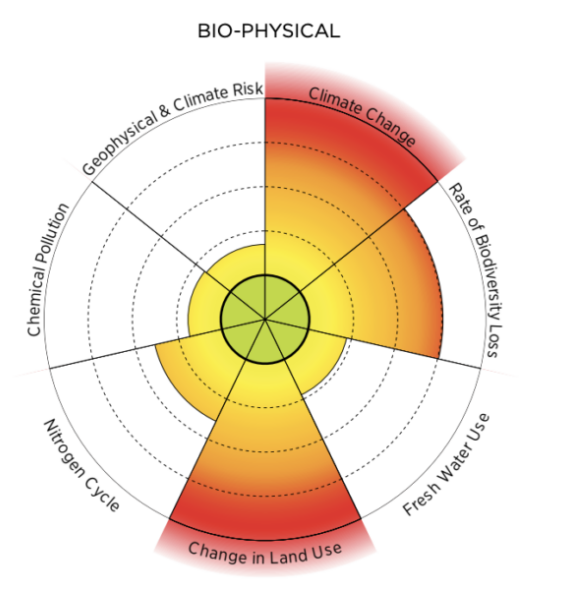
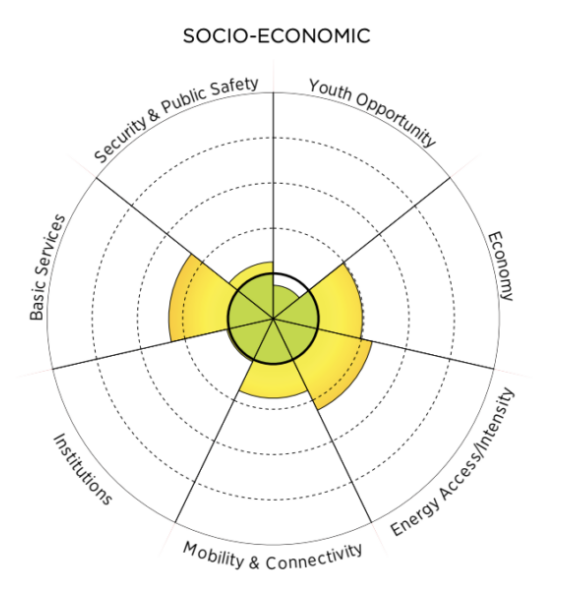
This lack of clarity makes it impossible to effectively balance economic prosperity with environmental conservation. That’s why we refer to the 60 biophysical and socioeconomic indicators developed by Dr. Daniel Hoornweg at Ontario Tech University as an initial baseline for sustainable development.Together, they create a context for measuring what matters anddesigning collaborative solutions for collective action to emerge.
Establishing a Baseline of Sustainability in the Great Lakes Region
Charitable contributions to the CGLR Foundation is the US and the CGLR Canada Foundation are crucial for helping us integrate environmental considerations into our regional public policy decisions, business strategies, and investment choices.
Charitable contributions to the CGLR Foundation in the US and the CGLR Canada Foundation are crucial for helping us integrate environmental considerations into our regional public policy decisions, business strategies, and investment choices.
Supporting CGLR and joining our programs and outreach efforts will help bring sector leaders and stakeholders together to grow the region’s US-Canada economic partnership, transition to a sustainable future, and strengthen our competitiveness in today’s fast pace global marketplace.