
The Council of the Great Lakes Region (CGLR) hosted its annual Great Lakes Sustainable Growth Forum, formerly the Great Lakes Economic Forum, from June 25-27th in Toronto!
The forum’s name change reflects CGLR’s new strategic direction and focus on solving for sustainability and creating the first sustainable region in the world.
This year, a partnership was formed with the Toronto Region Board of Trade who served as the Forum’s co-host, bringing together leaders from across sectors and borders to address pressing socio-economic and environmental challenges and opportunities in North America’s industrial heartland that also serves as the guardian of the largest surface freshwater system on earth.
View the 2024 photo gallery HERE.
Sign up HERE to join our mailing list and be informed about CGLR’s future events and activities.
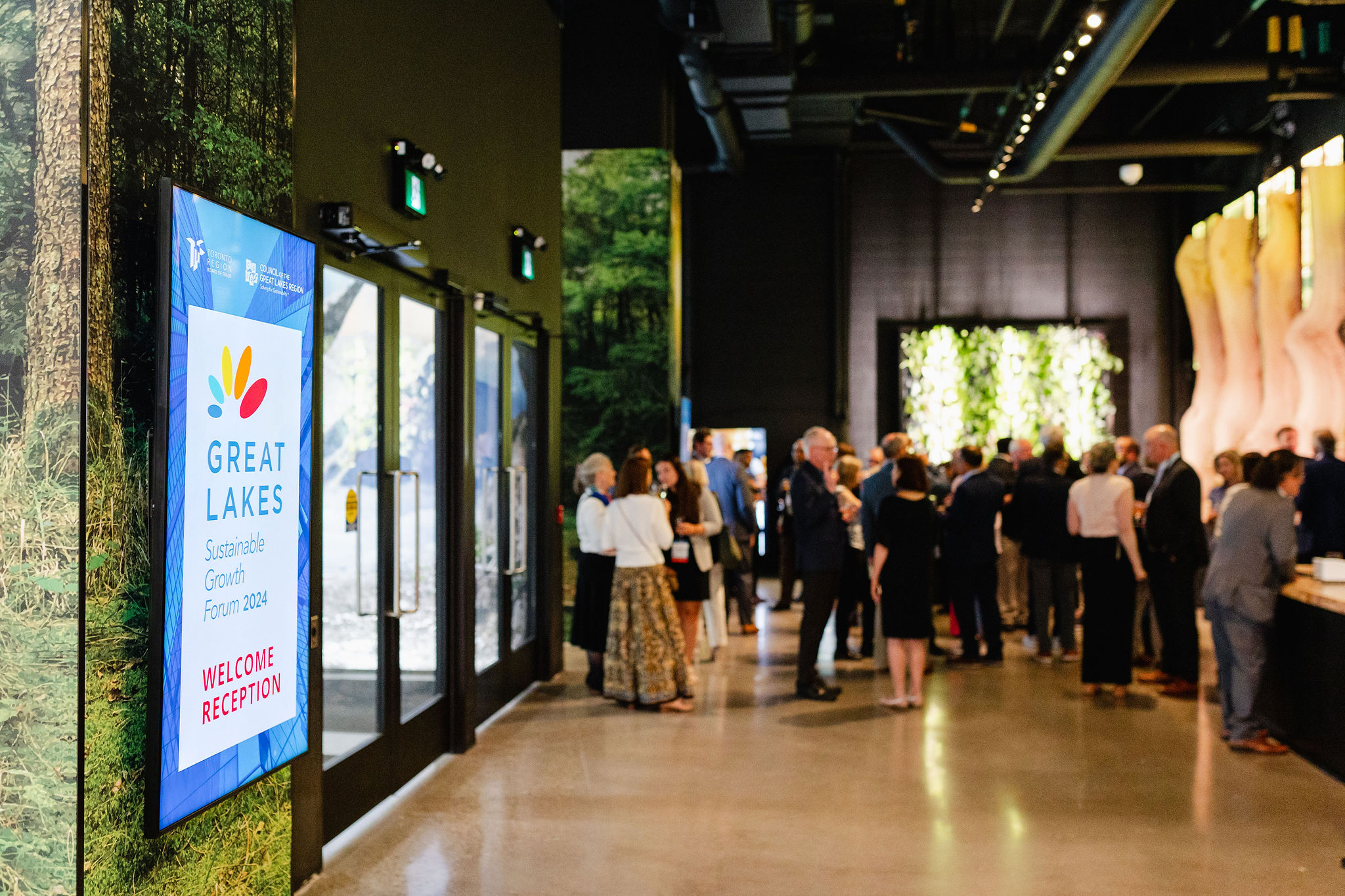
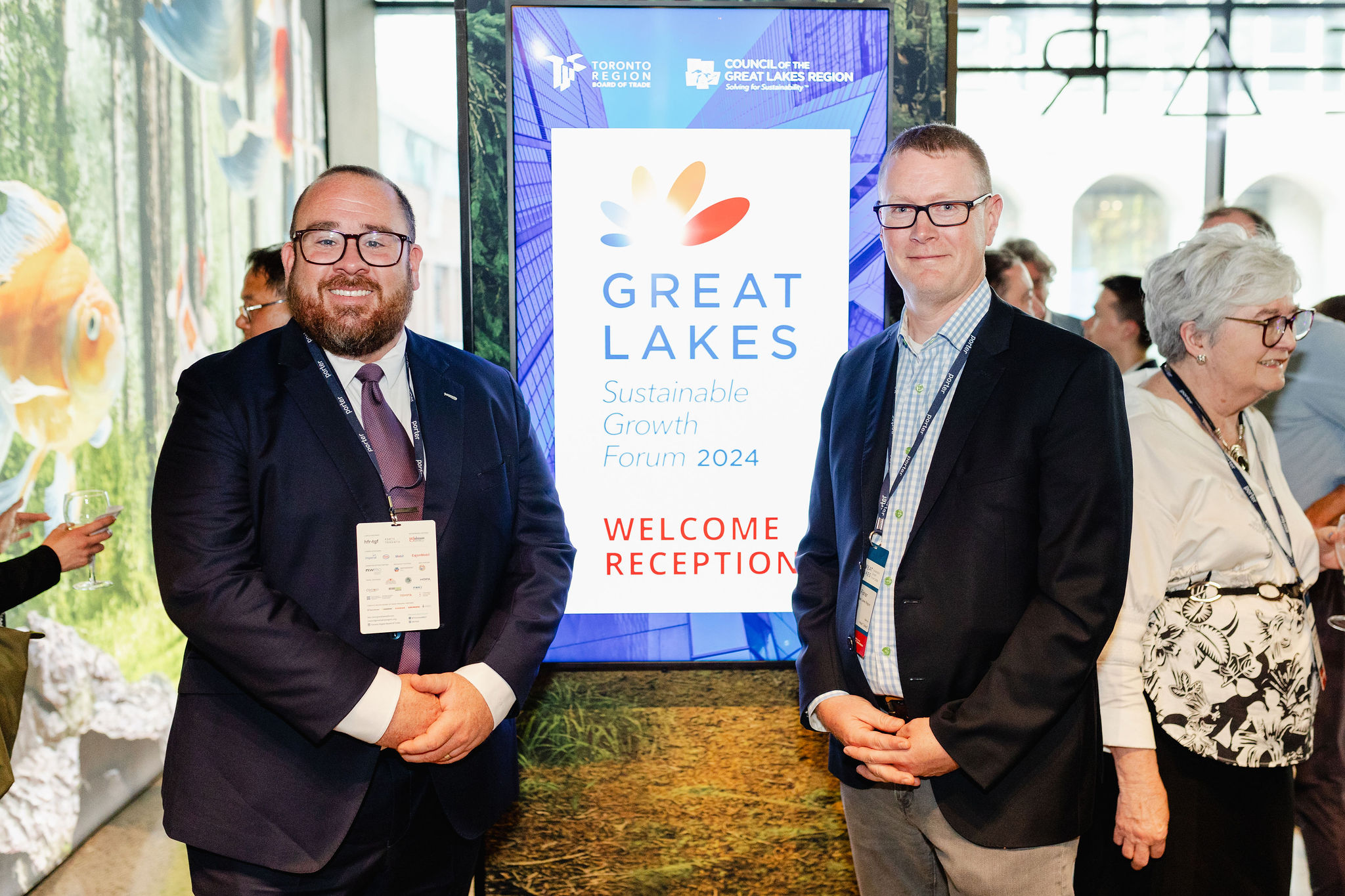
The 2024 Great Lakes Sustainable Growth Forum kicked off with a spectacular opening reception at Arcadia Earth, which provided an opportunity for networking as well as a unique immersive experience that inspired guests to take action towards a more sustainable future.
Adam Tindall-Schlicht, Administrator, Great Lakes St. Lawrence Seaway Development Corporation, welcomed guests as they enjoyed refreshments before exploring the various exhibits about environmental change, including biodiversity loss, plastic pollution, and climate change.
The evening offered a perfect setting to start the conference and the conversations about how we can responsibly grow the Great Lakes regional economy, ensure all the region’s people are thriving, and protect the Great Lakes and the environment for future generations.
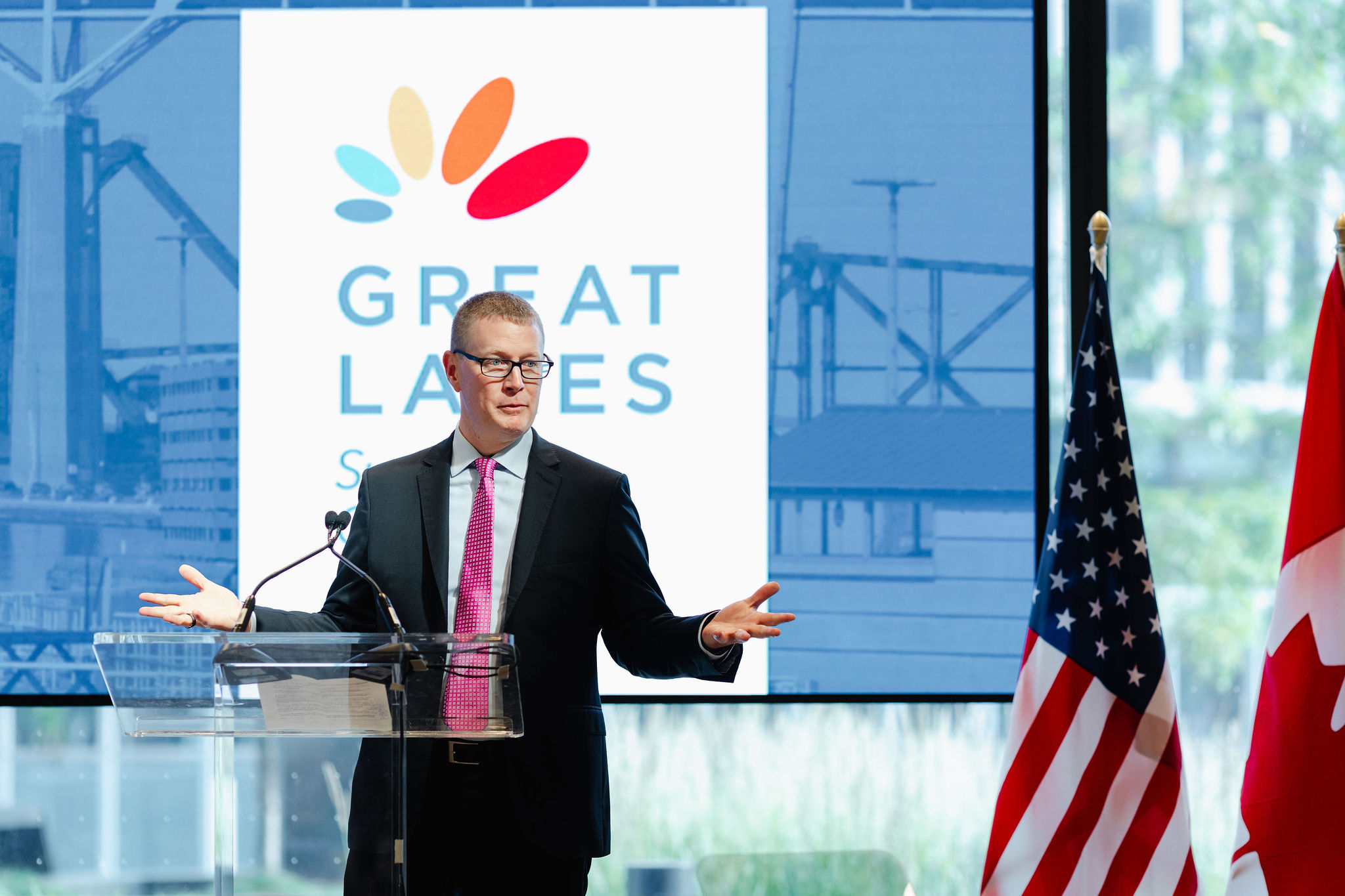
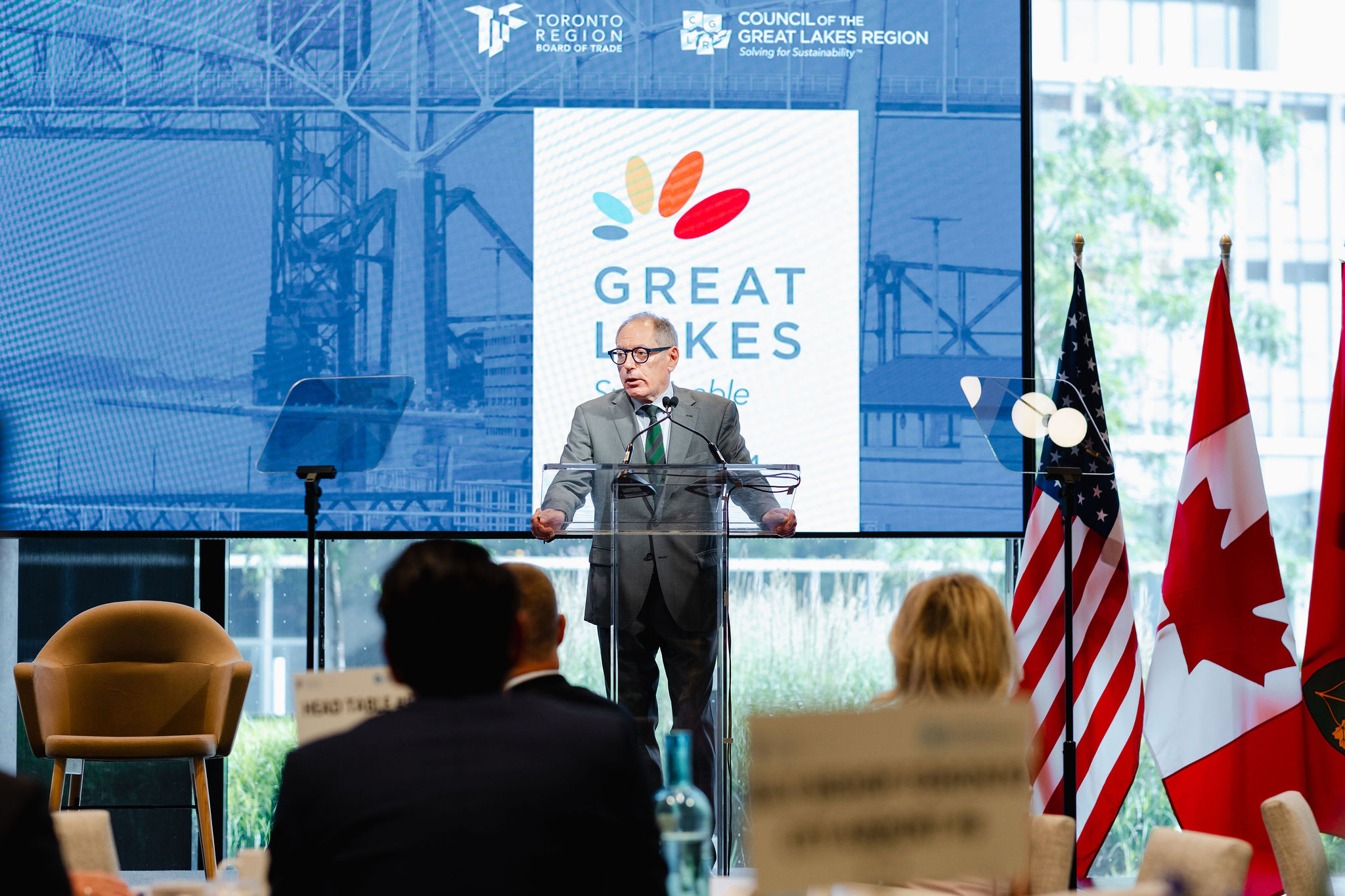
Spanning eight U.S. states and two Canadian provinces, the Great Lakes megaregion is an economic powerhouse with an annual GDP exceeding CA$8.0 trillion (US$6.0 trillion). Accounting for more than 50% of the total value of two-way goods trade between the United States and Canada, the region supports over 50 million jobs, roughly one-third of the combined American and Canadian workforce. At the heart of this dynamic, deeply integrated economy are the five Great Lakes that hold 20% of the world’s and 84% of North America’s surface freshwater.
With this in mind, the President and CEO of CGLR, Mark Fisher, reminded attendees that we can no longer afford to consider social, economic, and environmental issues in isolation from each other. All levels of government, companies across all sectors, and individuals living in cities and rural communities must try to understand and manage change in a rapidly changing world.
Similarly, the CEO of the Toronto Region Board of Trade, Giles Gherson, the co-host of this year’s Forum, opened the event by saying, “the task is to ensure our region remains a competitive force in the global economy… The path forward is greater connectivity and greater partnership. And more infrastructure to support our critical transportation and shipping needs.”

Following a state of the Great Lakes economy outlook from Doug Porter, Chief Economist at BMO Capital Markets, and an overview of North American voter attitudes from Don Guy, owner of Pollara Strategic Insights, Premier Doug Ford picked up on the theme of partnership, advocating for a regional approach to economic and environmental collaboration.
Ford stated, “We need to shift our thinking. I’m guilty of saying ‘buy Canada, buy Ontario.’ We’re going to change that phrase to ‘buy North America,’ because if it comes down to it, it’s us versus the rest of the world. And we’re so much stronger when we work together.” The Premier of Ontario also remarked that “it is not the economy or the environment, it is the economy and the environment.”
The economic success of the region must incorporate the discussion of both environmental protection and community well-being. With the goal of bringing the economy and environment closer together, the Great Lakes Sustainable Growth Forum, through plenaries and breakout sessions, covered a wide range of topics crucial to the region’s sustainable development:

The region benefits from a long-standing relationship between the United States and Canada. This plenary session included Canada’s Consul General to New York Tom Clark, the US Consul General to Toronto Baxter Hunt, and the Government of Ontario’s representative in Washington David Paterson, to discuss the importance of cross-border collaboration and coordinated industrial and environmental policies that will strengthen the region’s long-term competitiveness and sustainability on both sides of the border – and ultimately the long-term success of the United States-Canada relationship.
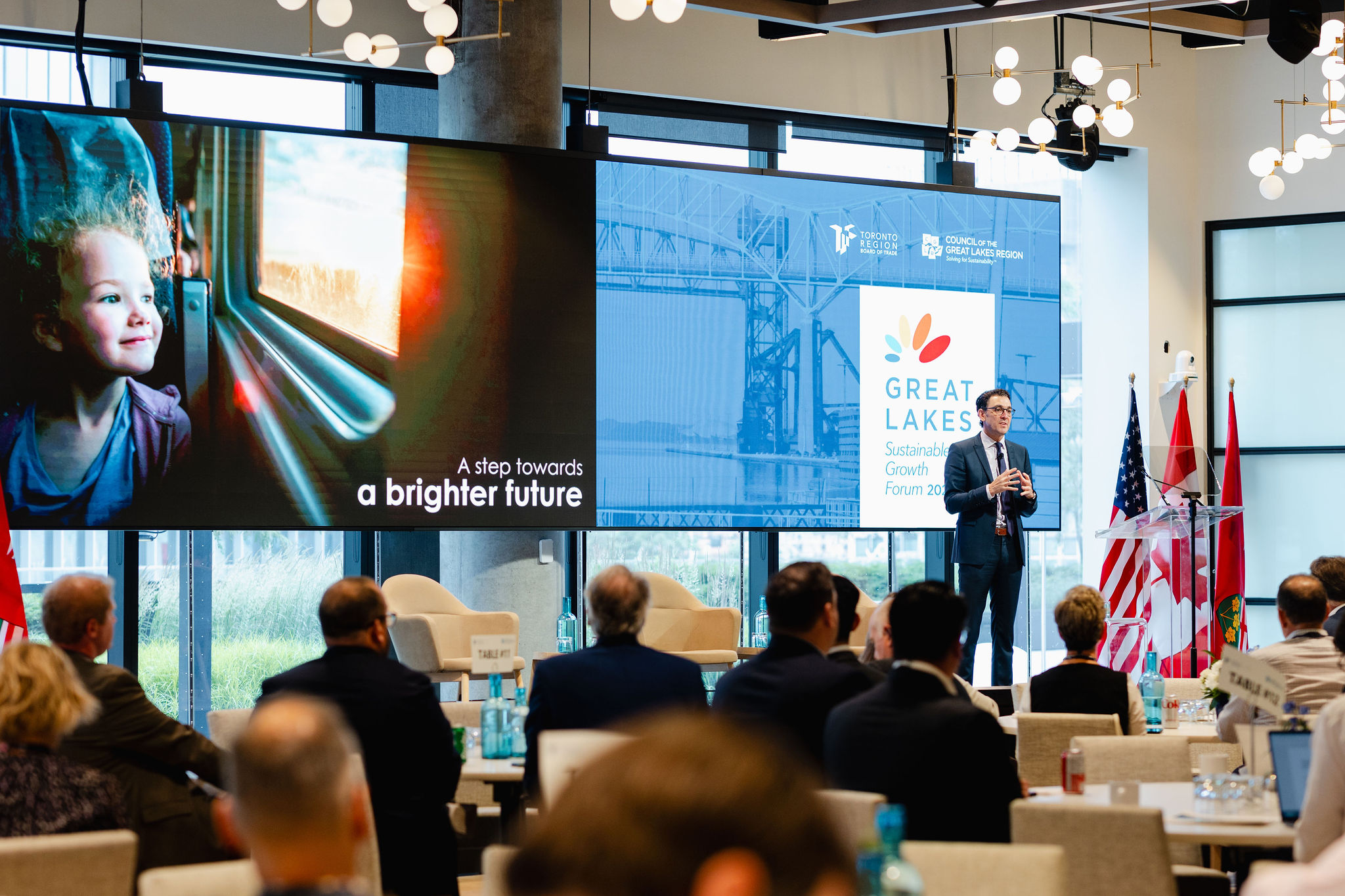
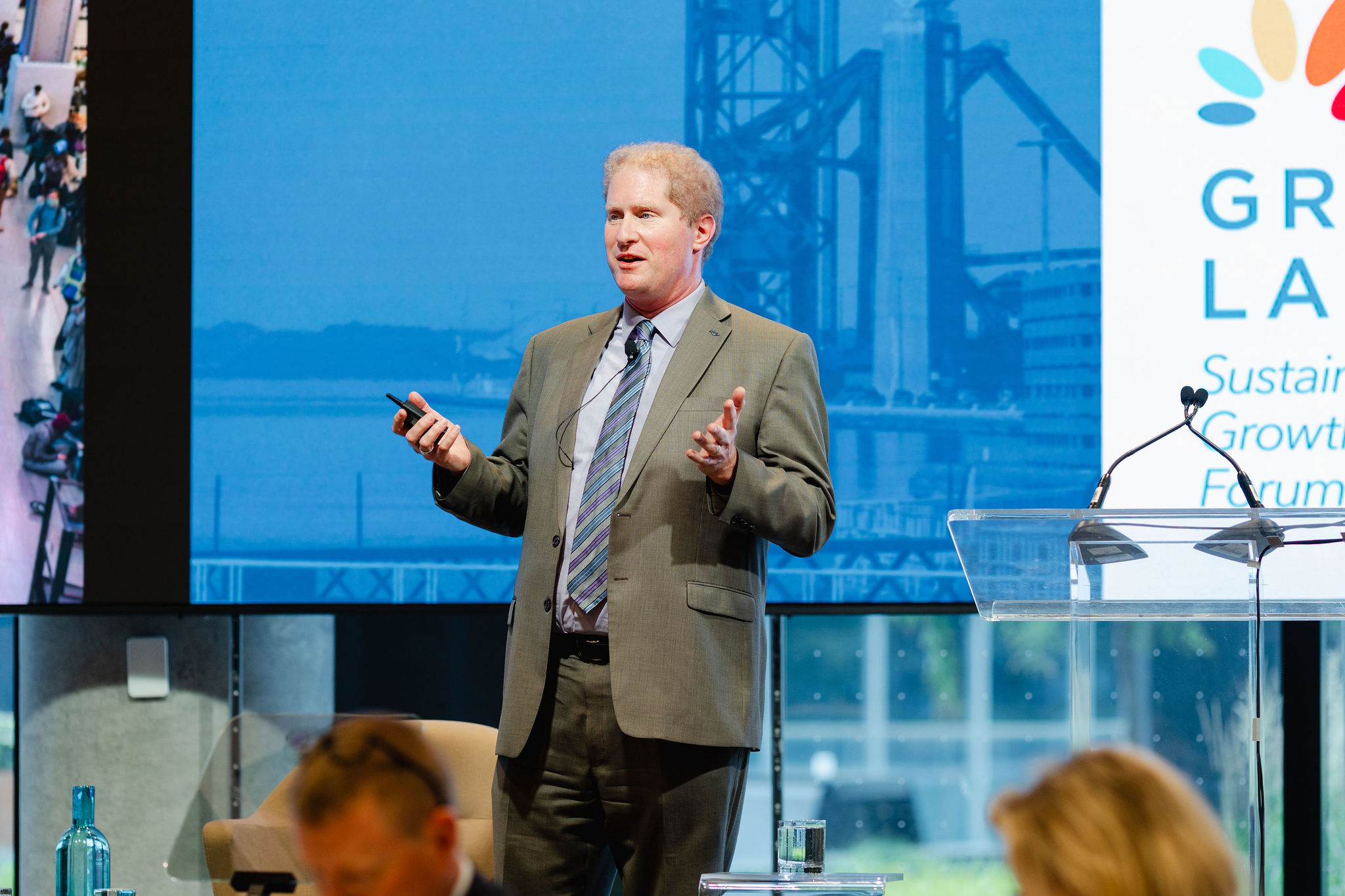
The luncheon keynotes showcased plans for building modern and fast rail networks across the eight Great Lakes, from Toronto to Québec City, and across the border. The high-frequency rail project in Canada is the largest transportation infrastructure project since the construction of the St. Lawrence Seaway over 60 years ago.
The project stands to benefit the region by providing a sustainable mode of transportation, creating jobs, and supporting economic and community development. To move more people across the border, the importance of aligned infrastructure and passenger preclearance to process travelers faster was also highlighted.

The Forum featured a timely panel on the future of the United States-Mexico-Canada Agreement (CUSMA), which will be up for reapproval in 2026. Panelists emphasized that CUSMA has provided stability and predictability for businesses, particularly in the automotive sector, which is crucial for the Great Lakes region.
The agreement has supported the expansion of trade, investment, and jobs across North America, while also delivering outcomes beneficial to workers and broader society. However, the conversation also raised concerns about potential renegotiations and changes that may come with the upcoming review. Key points of discussion included:

The manufacturing sector’s resurgence was a major highlight of this panel. Ontario and the neighboring Great Lakes states have attracted significant investments from automotive giants like General Motors, Ford, Honda, Toyota, and others, signaling the region’s growing importance in sustainable and innovative transportation solutions. However, to continue to compete globally, a renewed regional vision for the auto sector, grounded by the changing nature of mobility, is required.

The Seaway, for decades, has connected the world to North America’s industrial heartland and this region to global markets. In recent times, however, this vital transportation mode and economic corridor has not been fully utilized. This session with Seaway administrators, operators, and shippers explored what is needed to maximize the use of this asset as both countries seek to strengthen their supply chains and improve the environmental performance of trade.
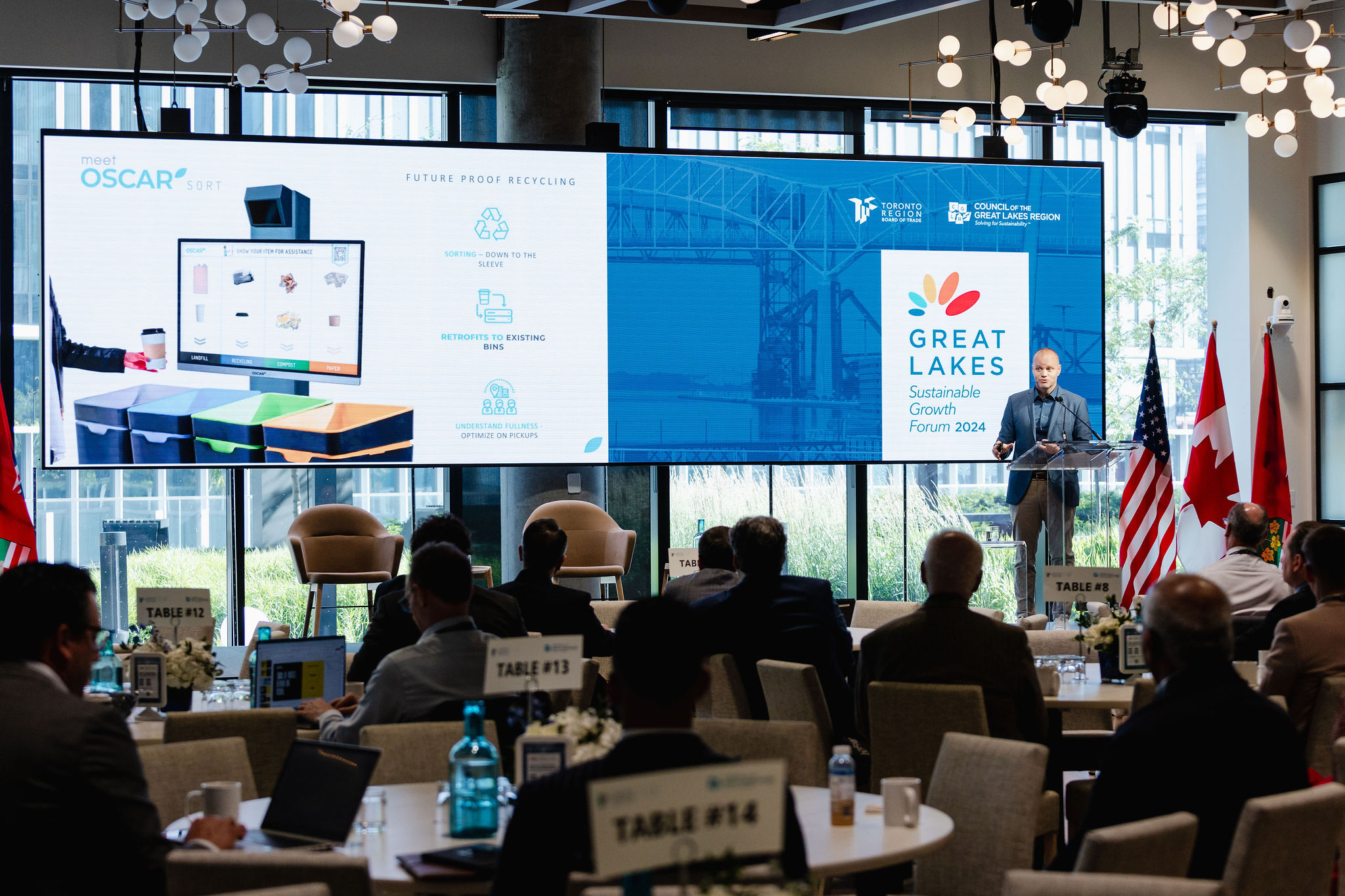
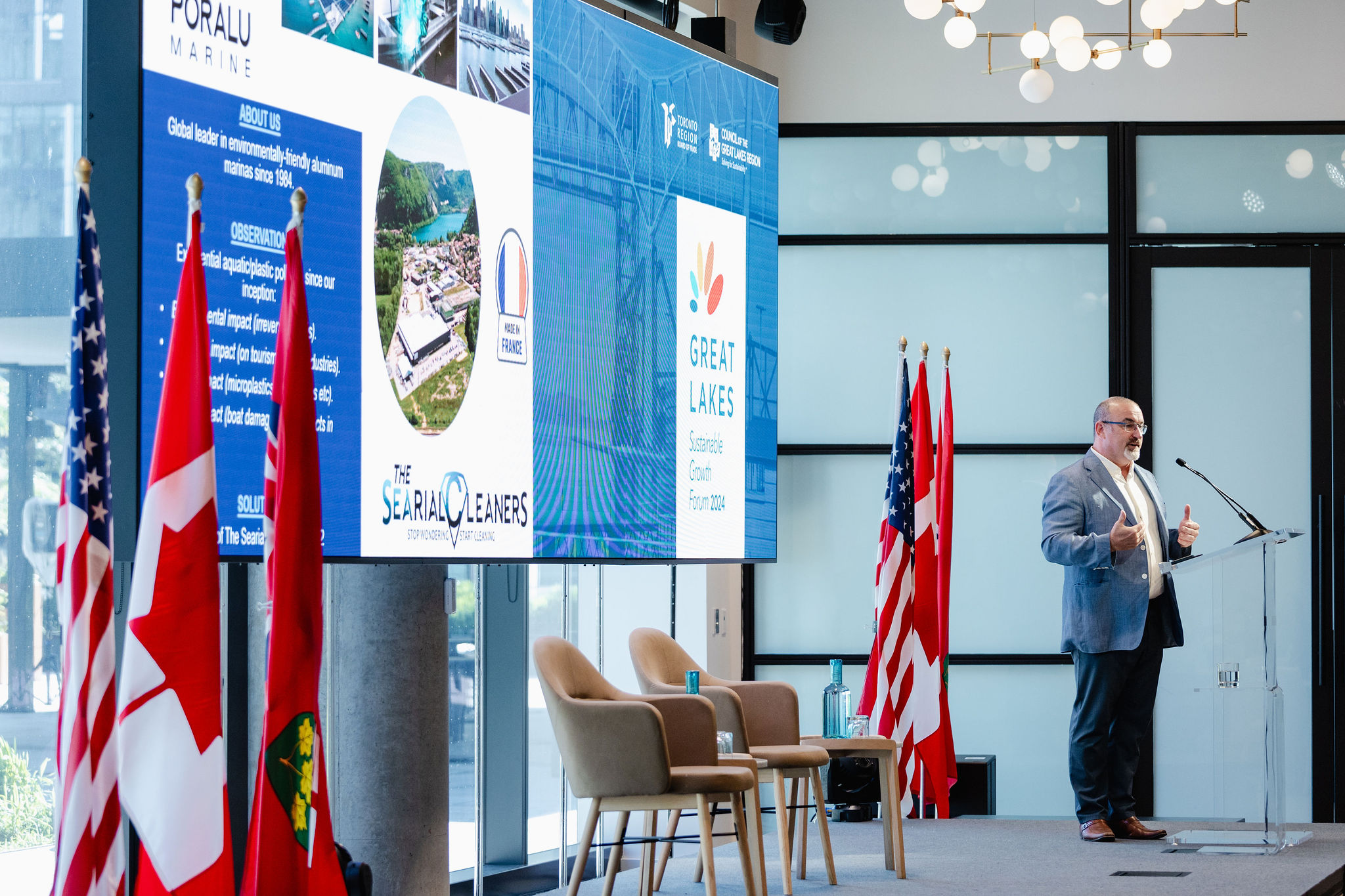
A unique element of this year’s Forum, the Tech Pitch breakfast consisted of presentations from startup companies in the region that provided insight into innovative technologies they are developing to create a more sustainable future, such as a smart recycling trash can, litter-capturing robots, water-quality monitoring floating robots, and more.

The Honourable Steven Guilbeault, Canada’s Minister of Environment and Climate Change, highlighted critical issues impacting the health of the Great Lakes and the need for collaboration, across borders and sectors, to protect this vital resource and its environment for future generations, as both countries seek to support responsible economic development and respond to population growth in the region.

A morning fireside chat discussed how businesses can balance responsibility and profitability, kicking off a day of discussions focused on environmental protection and sustainability.
Sustainability leaders from the private sector shared their journeys and gave advice on how businesses of all sizes can launch and grow their sustainability efforts. A key takeaway: incorporating the UN Sustainable Development Goals (SDGs) offers a good framework for Environmental, Social, and Governance (ESG) metrics, and companies should focus on the ones that are material to them.

With leaders in sustainable finance from both the U.S. and Canada gathered on the main stage, this plenary discussion leaned into the challenges and opportunities around financing sustainable initiatives. Sustainable finance aligns financial systems with the promotion of long-term social and environmental sustainability with economic success.

Bob Rae, Canada’s Ambassador to the United Nations, provided a compelling overview of the UN Sustainable Development Goals (SDGs), explaining their origins and significance. He remarked, “When we started, there were 52 countries outside the original San Francisco agreement. Now, there are 193. The introduction of a truly universal body has made sustainable development a central issue at the UN.”
Rae emphasized the necessity of the SDGs: “These goals are about creating a set of metrics to measure our progress on issues ranging from health and well-being to economic prosperity and environmental sustainability. They apply to all countries, including developed nations.”
Rae also highlighted the importance of local implementation: “The SDGs are not controlled by the UN but depend on member states and regions. This makes our conversation here vital, as we in the Great Lakes region have tremendous wealth, a diverse economy, and significant environmental challenges.”

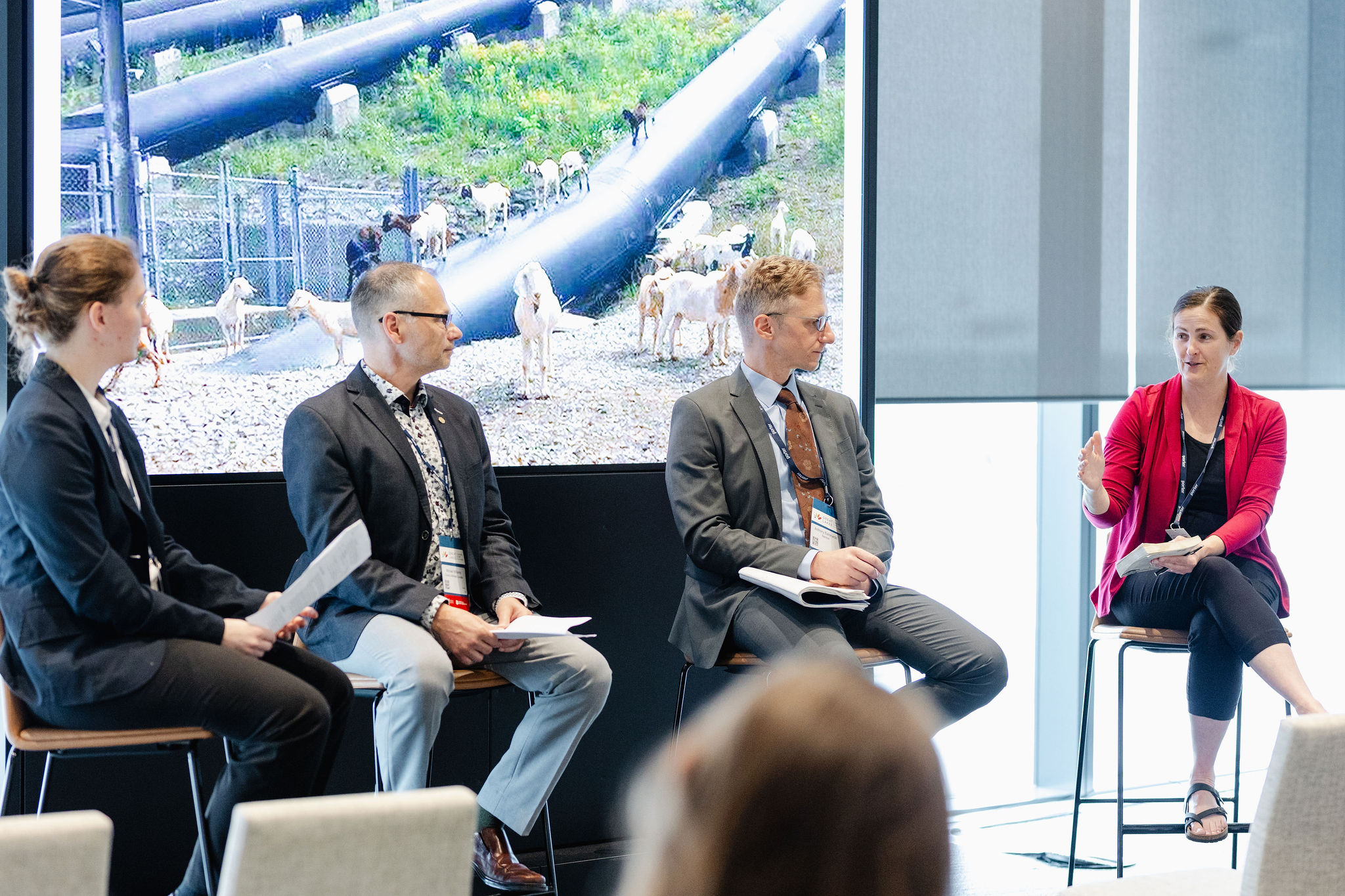
Over 80% of the consumer products we use in the region are landfilled and over 80% of the litter washing up on the Great Lakes shoreline is plastic. This session convened experts to provide an update on the Council of the Great Lakes Region’s Circular Great Lakes initiative and efforts to forge a future without plastic waste and litter in the region, from the necessary policy changes and investments in advanced infrastructure required to increase recycling rates and reduce waste at source, to reconnecting and rebuilding trust with consumers.

What are you fighting for? The last presentation of the Forum left guests with the message of how change doesn’t come from doing what everyone else does. For the Great Lakes region to be the most sustainable region in the world, we must ensure sustainability is top of mind and understood by all sectors and consumers.
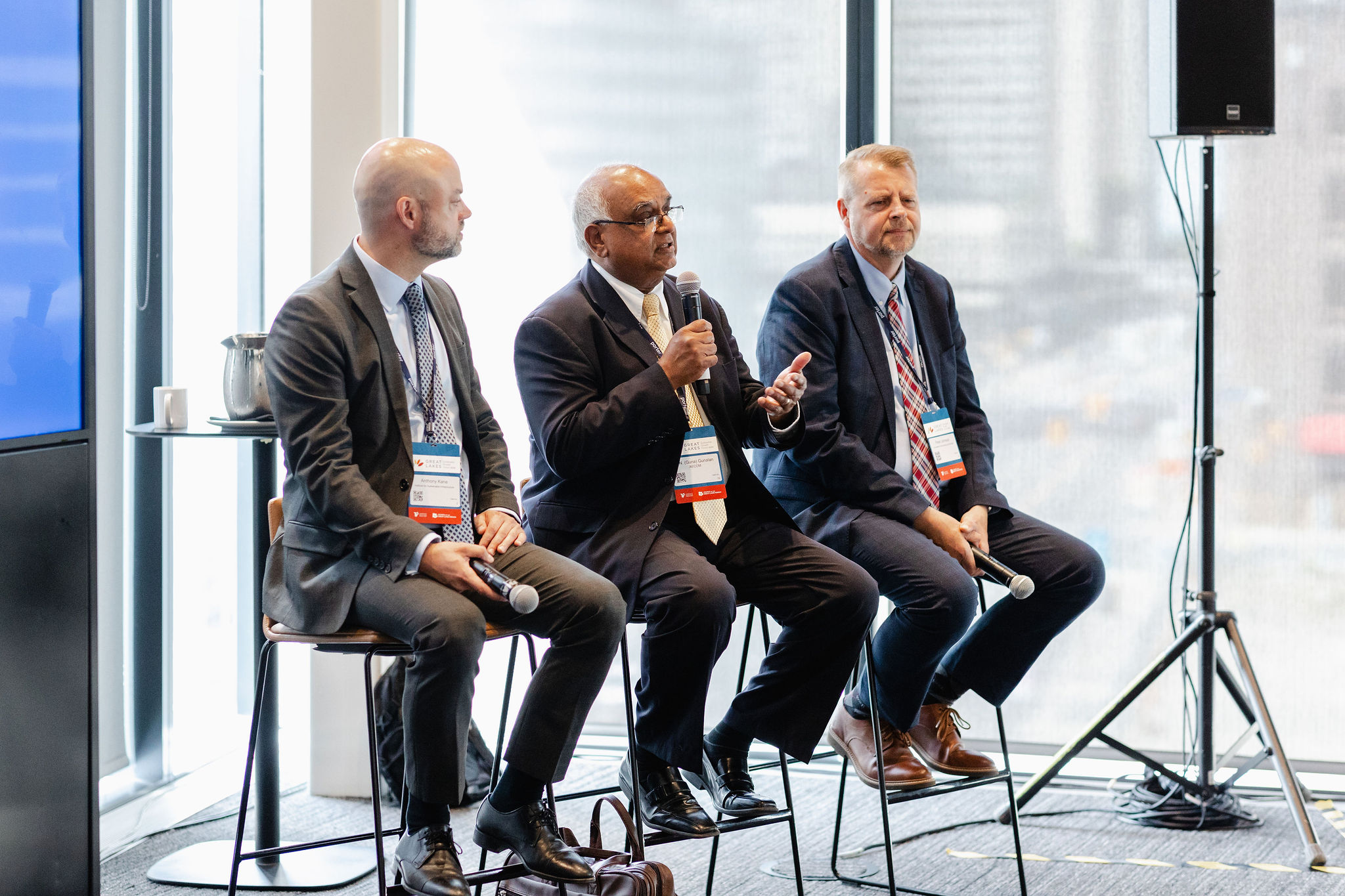
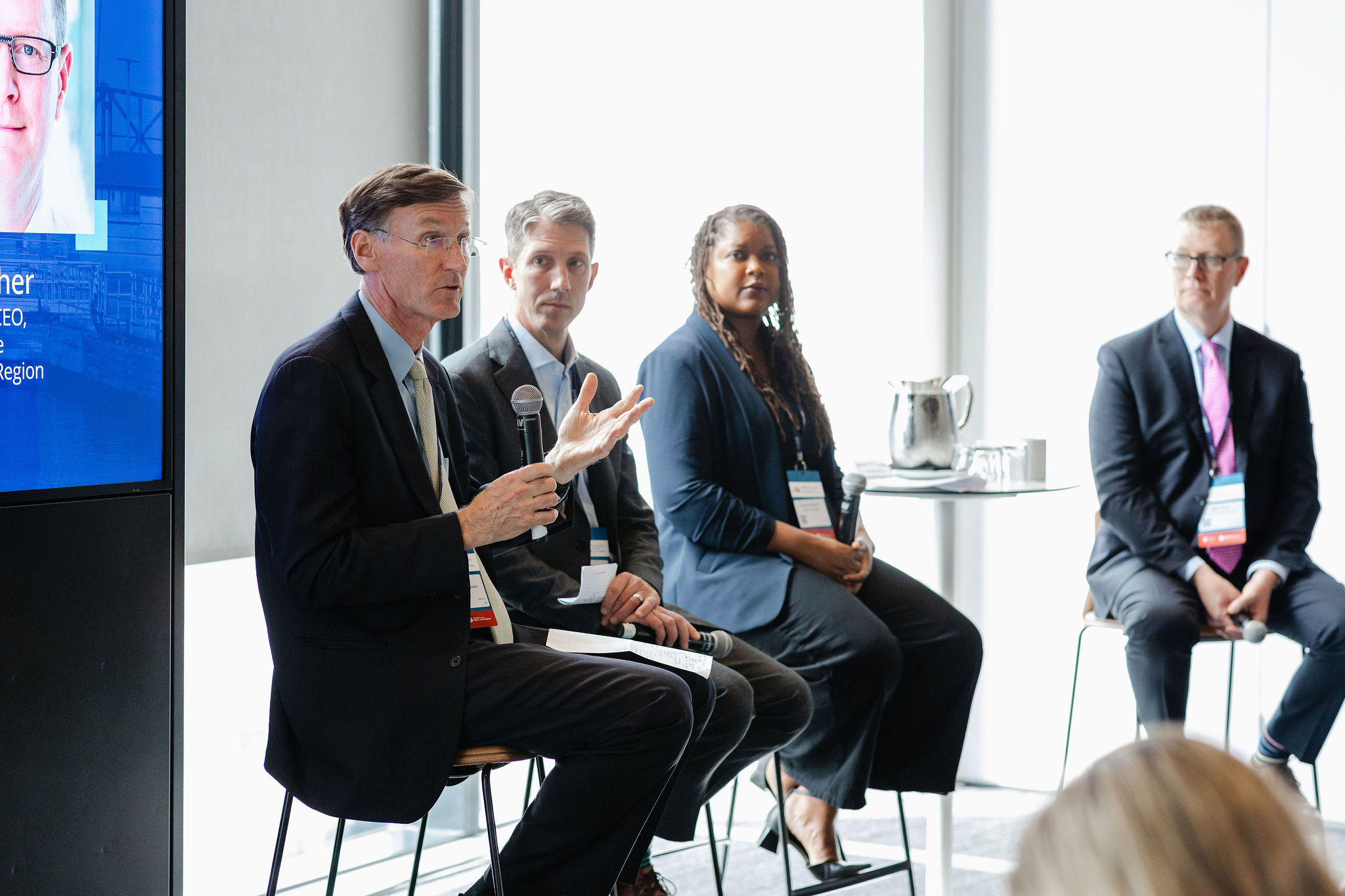
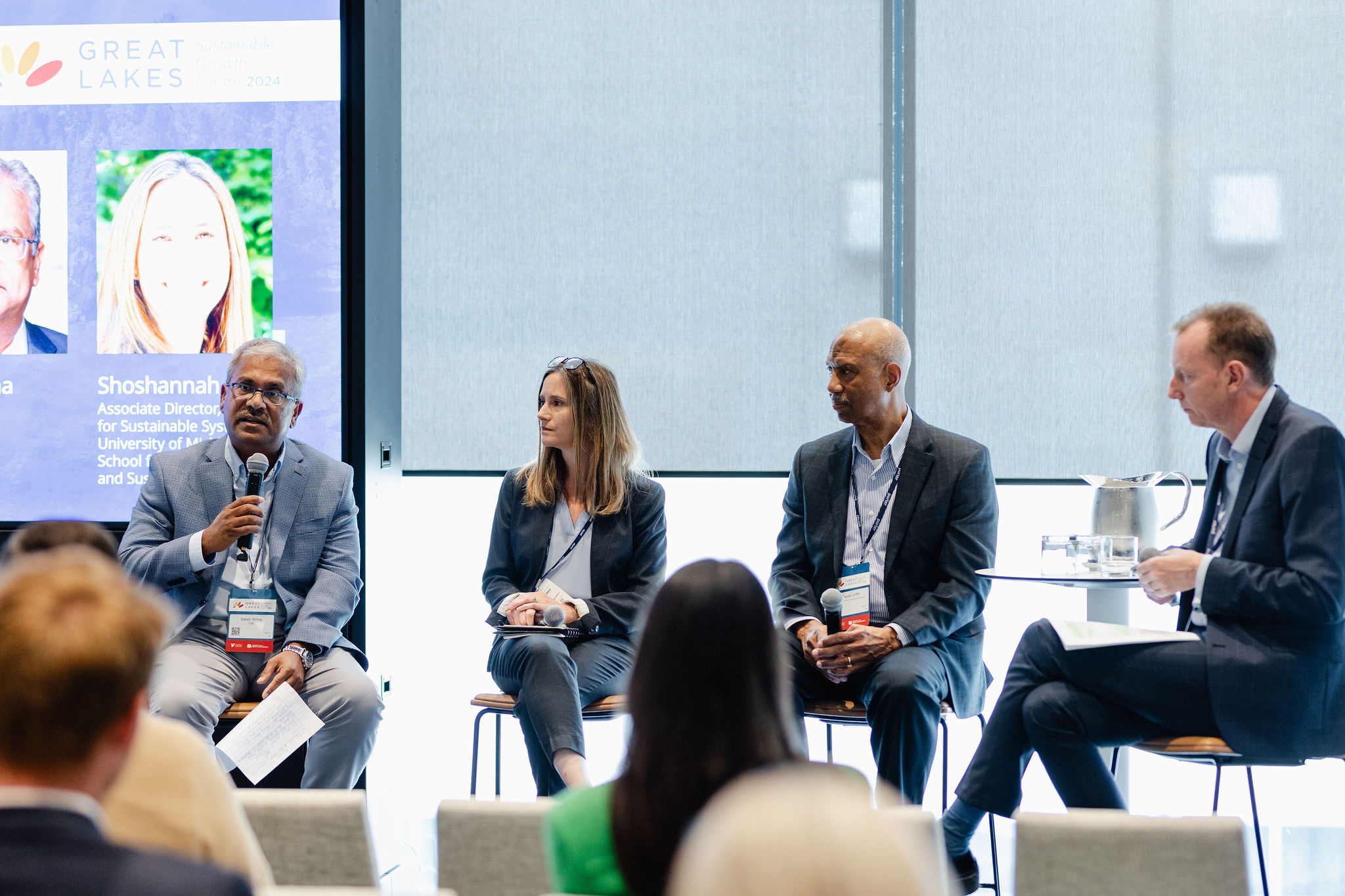
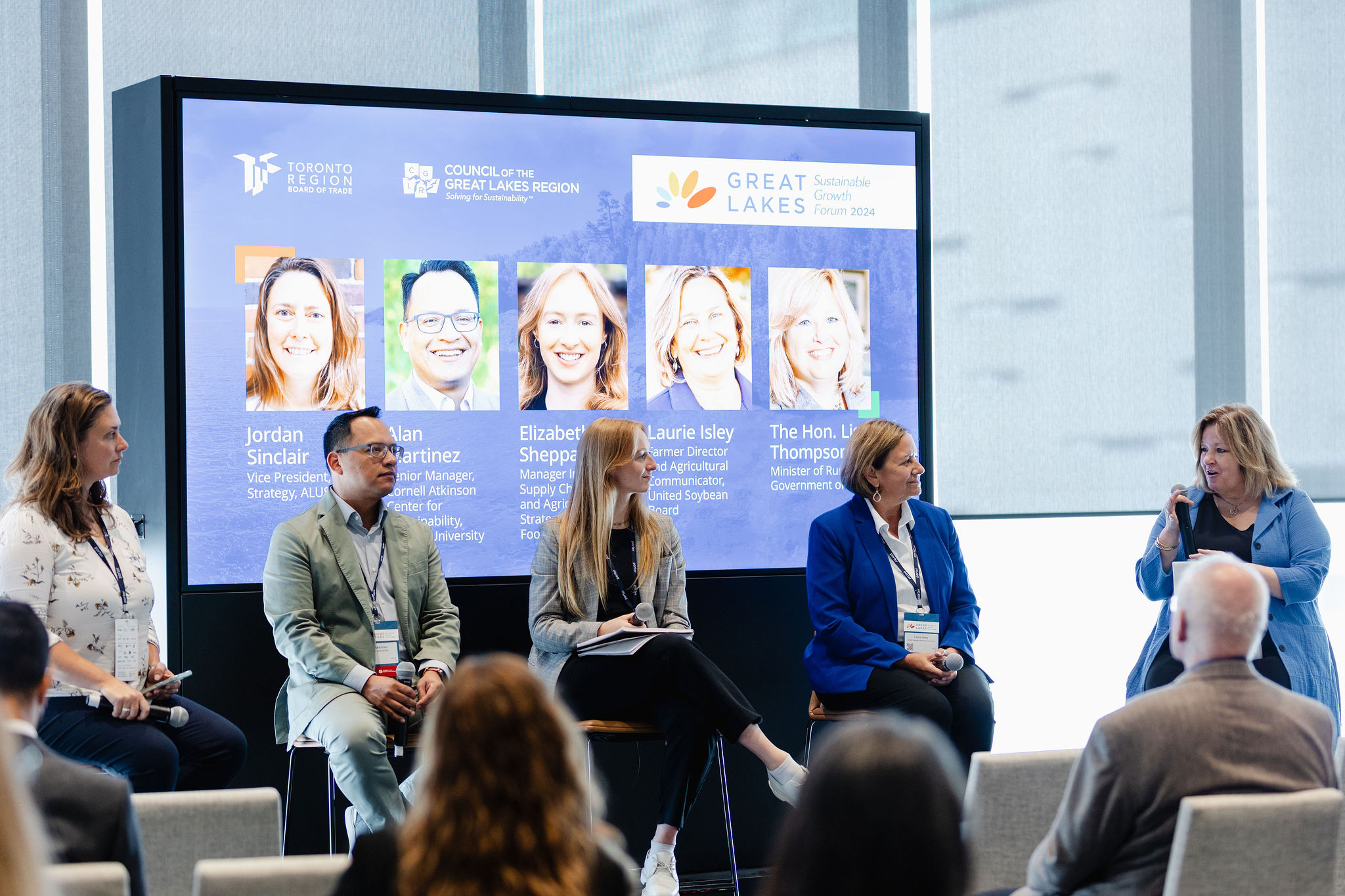
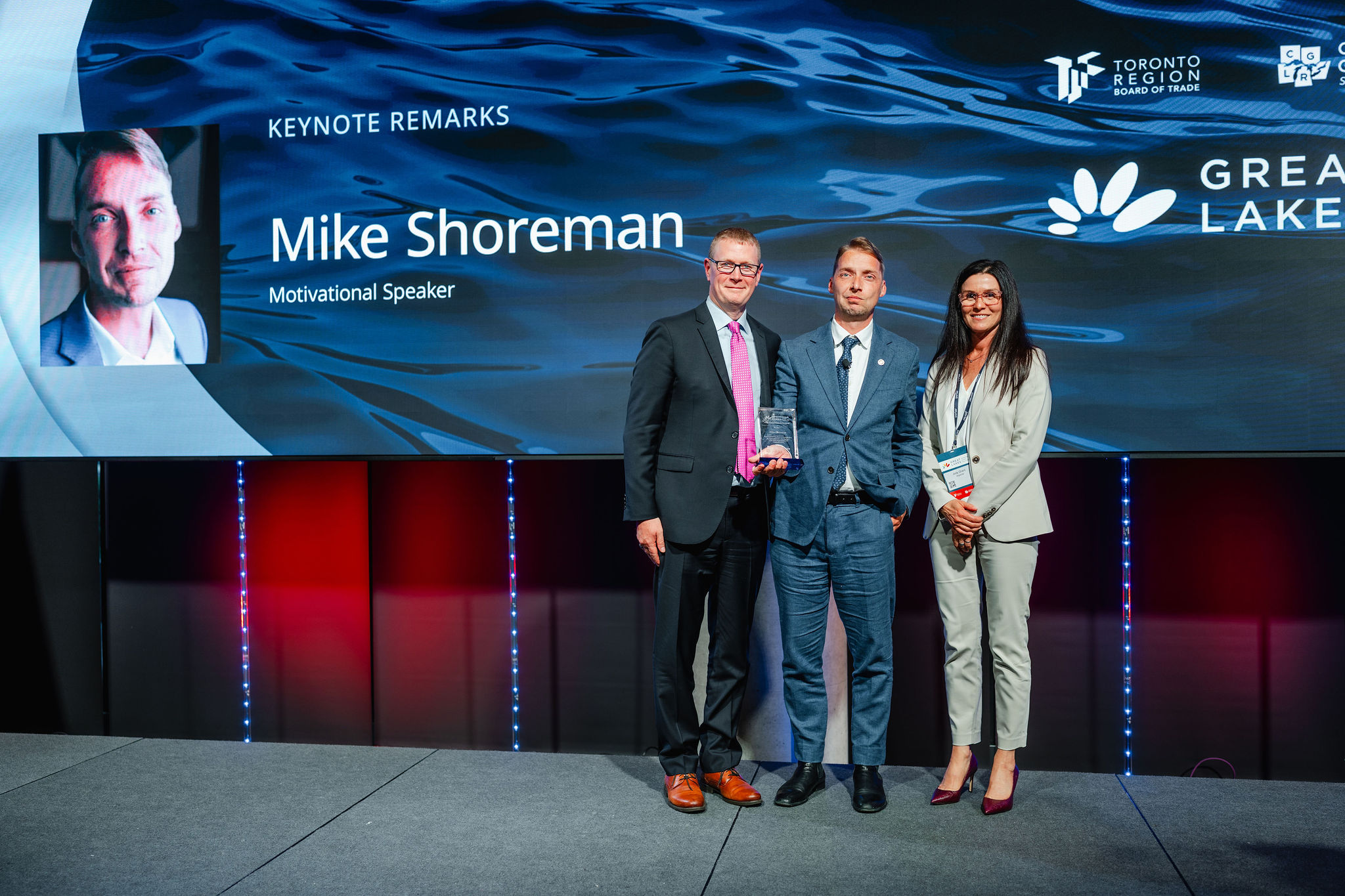
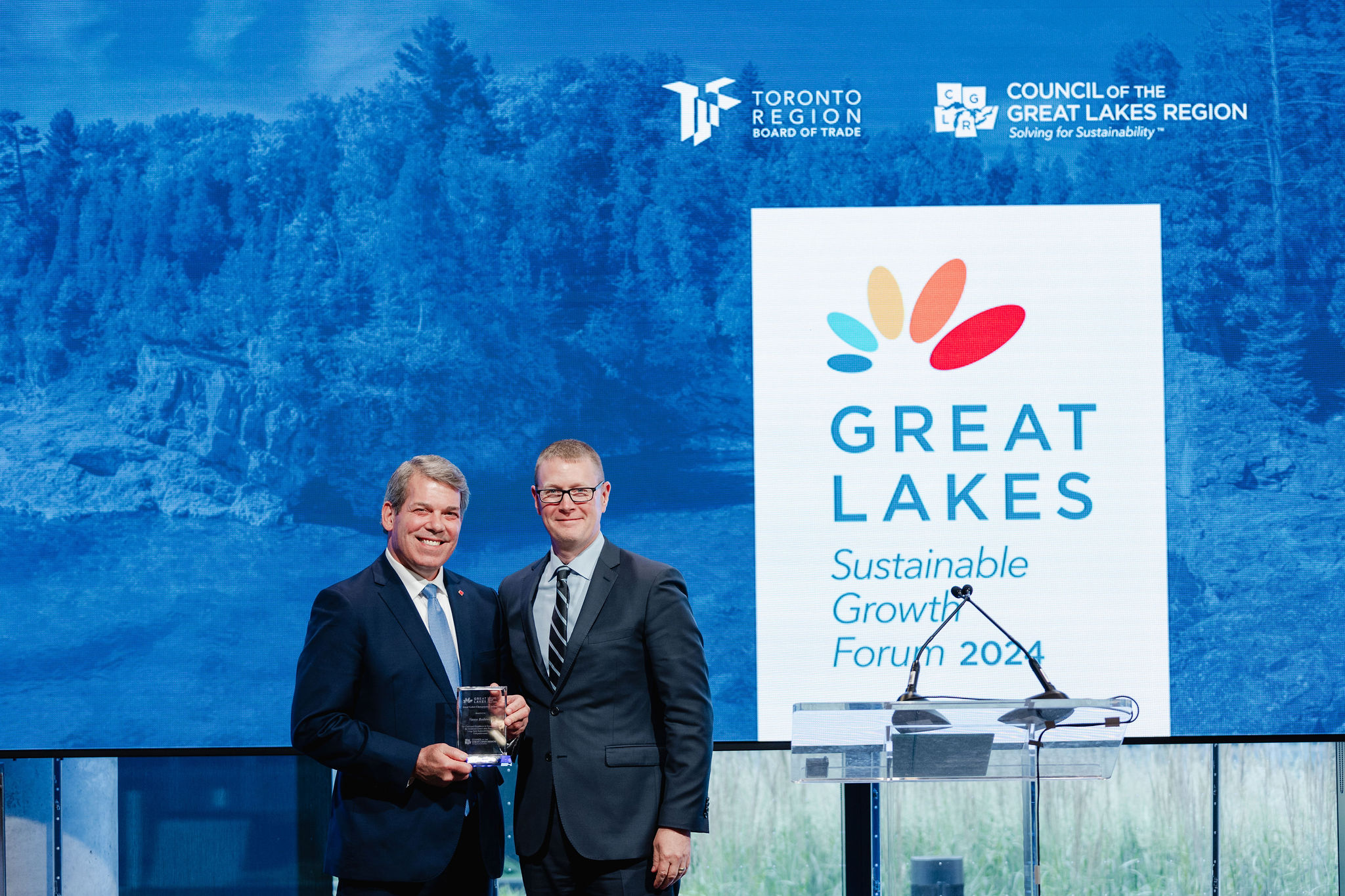
CGLR had the privilege of awarding Vance Badawey, Parliamentary Assistant to the Federal Minister of Transport, and Mike Shoreman, Motivational Speaker and Mental Health Advocate, with this year’s Great Lakes Changemaker Awards!
The Great Lakes Changemaker Award was created in 2019 to recognize individuals, companies, non-profit organizations, and academics who are leading the way to strengthen the long-term competitiveness and sustainability of the bi-national Great Lakes region. The award recognizes international leadership on a range of economic and environmental issues.

On the final day of the forum, a significant Memorandum of Understanding (MOU) was signed between the Great Lakes and St. Lawrence Cities Initiative (GLSLCI) and the Council of the Great Lakes Region (CGLR). Cobourg Mayor Lucas Cleveland, representing GLSLCI, and Brian Ames, Chair of the Board of Directors for CGLR, were the signatories.
This partnership aims to guide the economic transformation of the Great Lakes and St. Lawrence region over the next 12 months by:

The 2024 Great Lakes Sustainable Growth Forum set the stage for continued collaboration and action as we work together to solve for sustainability in the Great Lakes region and create the first sustainable region in the world, the focus of CGLR’s new strategic plan.
Mark Fisher, President and CEO of CGLR, stated this Forum represents a crucial step towards balancing economic growth and environmental stewardship dynamically, ensuring the Great Lakes-St. Lawrence region remains a vibrant and competitive area for generations to come.
The success of this year’s Forum underscores the importance of continued dialogue and cooperation across borders and sectors, to bring the economy and environment together in our public policy choices, business strategies, investment decisions, and regional planning.
Thank you to our partners who helped make this event a success:






Charitable contributions to the CGLR Foundation in the US and the CGLR Canada Foundation are crucial for helping us integrate environmental considerations into our regional public policy decisions, business strategies, and investment choices.
Supporting CGLR and joining our programs and outreach efforts will help bring sector leaders and stakeholders together to grow the region’s US-Canada economic partnership, transition to a sustainable future, and strengthen our competitiveness in today’s fast pace global marketplace.